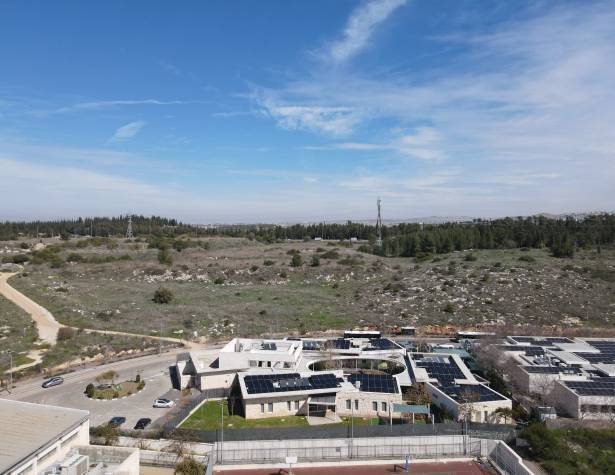



The first residential neighborhood of the city's second phase will be built in the west of the city, in a diverse mix that includes low-cost housing and special housing, alongside commercial, employment and public buildings. In keeping with the city's green character, approximately 90 dunams will be dedicated to open public spaces.
Modi'in Maccabim Re'ut Municipality announced that the "Ma'ayonot" neighborhood, the first neighborhood to be built as part of the city's second phase, has been approved for submission to the Central District Planning and Building Committee. This means that the plan has received initial approval from the district committee ahead of the continuation of the planning and implementation process.
Mayor of Modi'in Maccabim Re'ut, Haim Bibas: "This is great news for the city of Modi'in Maccabim Re'ut, which is one of the most sought-after and high-quality cities in Israel, thanks to its residents and the way we manage it. The Maa’ayanot neighborhood is another pillar in the balanced and responsible growth of Modi'in Maccabim Re'ut. I thank everyone who took part, the council members, the district committee, the engineering administration team and all those involved in the work. There was in-depth, professional and fruitful discussion. Now we look forward to continuing the preparations for the establishment of the neighborhood, and especially, to creating quality housing solutions for the city's young people, our children, who will be able to continue living here, near their parents."
The neighborhood will cover approximately 600 dunams, west of the Kramim neighborhood. It will border Highway 443 to the north and Emek HaEla Boulevard to the south. "Ma-ayanot" will reflect the municipality's core values: careful planning, a mix of uses, a green environment, and a vibrant commercial street in the heart of the neighborhood.
According to the plan, the neighborhood will include approximately 3,575 housing units. The construction will include 6-8-story buildings with a commercial facade or public institutions on the ground floor, as well as two high-rise residential towers. In addition, approximately 300 housing units for special housing will be built.
The main street in the neighborhood will extend from east to west, and will include mixed uses of residence, commerce, and employment, with urban squares. In the heart of the neighborhood, the central park and public buildings will be located, alongside the main avenue. In the northern part of the neighborhood, parallel to Highway 443, an urban promenade will be built, which will be a continuation of the promenade of the Kramim neighborhood, and will include walking and cycling paths.
The neighborhood will also include:
Public institutions and buildings: approximately 58,000 square meters.
Combined open spaces: approximately 27,000 square meters.
Employment: approximately 1,500 square meters.
Promenade: approximately 3,500 square meters.
Road infrastructure: approximately 158,000 square meters.
Public open spaces: approximately 89,500 square meters.
The planning of the neighborhood was carried out by architect Amir Kolker from Kolker Kolker Epstein Architects Ltd., and the management was carried out by Moshe Cohen from Keshet M.K. Project Management Ltd.