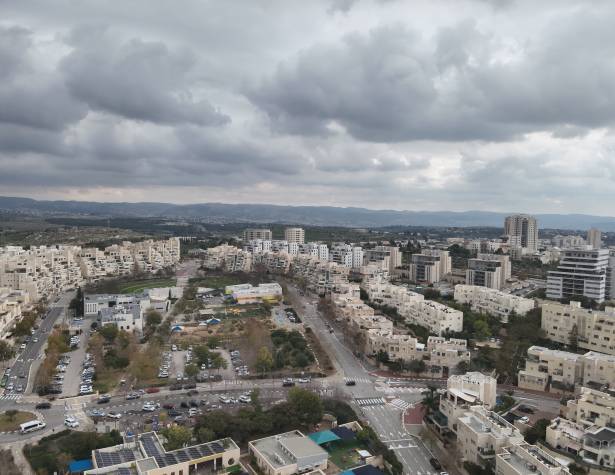
A first-of-its-kind emergency conference in Rosh HaAyin brought together heads of authorities and government ministries to formulate national steps to combat waste fires and air pollution in central Israel.
On Thursday, 1.1.26, a first-of-its-kind emergency conference was held on the subject of air pollution from rogue waste fires in the territories of Judea and Samaria. Participants included Finance Minister Bezalel Smotrich, who is also responsible for Civil Administration at the Ministry of Defense; Mayor of Modi'in Maccabim Re'ut and Chairman of the Federation of Local Government in Israel, Haim Bibas; the mayor of Rosh HaAyin, Raz Sagi, and heads of authorities, government officials, and representatives of professional offices. The conference was held against the backdrop of the worsening fire phenomenon, the impact of which reaches many localities in central Israel, including Modi'in Maccabim Re'ut, Kfar Saba, Shoham, Rosh HaAyin, Ariel, and more.
Mayor Haim Bibas said at the conference: "In a civilized country, citizens do not check the wind direction to know if they are allowed to breathe.
What is happening here is not an environmental nuisance, it is terrorism for all intents and purposes, the purpose of which is to deliberately and continuously harm the civil security of hundreds of thousands of residents on a daily basis." Bibas also thanked Minister Smotrich, who is personally following the issue and adopting the operational plan proposed by the local authorities, which includes the establishment of advanced waste recovery and treatment facilities, and the creation of a dedicated and strong enforcement force that will deal with environmental crime with a heavy hand. "When the plan is fully implemented, with infrastructure, enforcement, budgeting and centralized responsibility, this issue can and should be resolved. The test now is in actions, not statements," Bibas concluded.
As a reminder, the conference was held following an emergency discussion held two weeks ago, chaired by Defense Minister Israel Katz, in which the phenomenon of waste fires in Judea and Samaria was first defined as a problem that threatens national security, which, according to the participants, requires a comprehensive government response, with powers, budget and presence in the field.
Among other things, a series of government measures were adopted:
Establishment of a regulated waste disposal site in central Judea and Samaria.
Operation of coordinated and continuous enforcement, not just spot operations.
Use of general orders to confiscate and confiscate trucks involved in illegal activity.
Allocation of immediate designated budgets for recruiting contractors, equipment and extinguishing fires - without bureaucratic obstacles.
Concentration of powers in the hands of one comprehensive entity that will operate with all entities.
The heads of authorities emphasized that the expectation now is for immediate and full implementation of the decisions, including the constant presence of enforcement officials, timely budget transfers, and ongoing performance reports.
According to them, the fight for clean air has become a fight for public health, and cannot remain confined to documents or meetings but must be seen on the ground.
"The move that has begun is an important step, but it is only the beginning of a much-needed change," concluded Bibas. "The public is not looking for headlines, but for clean air and safe breathing. We are here to make sure that promises become actions on the ground."