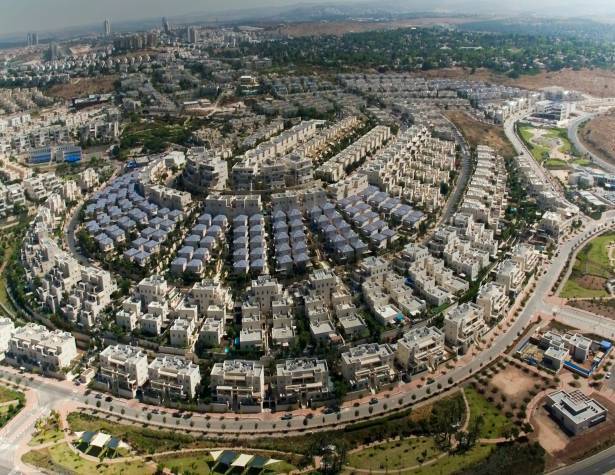
The new statistical yearbook is being released in a celebratory edition to mark the 30th anniversary of the city's founding, and maps dozens of demographic, economic and social trends of change over the past three decades.
The yearbook is being produced for the sixth year in a digital version on the municipality's website, and maps more than 50 demographic, economic and social issues, describing the current picture of the city and its neighborhoods as well as the trends that have shaped the city over the past three decades.
The yearbook was prepared by the Strategy, Research and Innovation Department together with municipal and national agencies, and incorporates tables, charts and maps, which allow for identifying trends, locating in-depth challenges and opportunities for determining long-term policy for decision-makers in the municipality. The data presented here is correct as of the end of December 2025.
Mayor Haim Bibas: "Modi’in Maccabim Reut is celebrating its 30th anniversary, and it continues to grow, develop and lead. Managing a city, certainly in a time when we are facing routine and emergency challenges, requires informed and data-based decision-making. To this end, we have established a comprehensive and accurate municipal data bank that brings together extensive information about the city. At the same time, we are developing advanced data analysis capabilities in the municipal digital innovation center, incorporating artificial intelligence-based tools. A strategic tool that helps us plan the future of the city, improving the quality of life in it as an innovative, community-based and leading city."
Yossi Avivi, Innovation, Strategy and Health Portfolio Holder: "The data in the yearbook constitutes an essential information infrastructure for our urban planning. They allow for an up-to-date and in-depth look at the city's needs, gaps that require a response, and directions for action for its continued development and advancement, while identifying new opportunities and key points for action. At the municipality, we have chosen to deepen reliable information through systematic data collection and continuous learning of the needs of residents. These insights are translated into cross-organizational municipal policy to improve the management of city resources and services."
So what can we learn from the new yearbook?
In terms of demographics, the city's population continues to rise and has 111,351 residents, an annual population growth of more than 2.1%, and in the socioeconomic ranking, the city is ranked 8 out of 10, the highest among cities with more than 100,000 residents. 55% of the city's areas are green, with the Nehalim neighborhood having the largest green area. In the new Moreshet neighborhood, the population rate is particularly impressive, with more than 10,952 occupancy (compared to the previous year with about 8,000 residents). About 40% of Moreshet residents are city residents who moved there from other neighborhoods.
The breakdown between men and women in the city shows that, as in previous years, the population is essentially at parity: 49.5% men and 50.5% women. Life expectancy in the city stands at an average of 87.7 years, the highest life expectancy in the State of Israel. The average age of a resident in the city is 35. Moreshet is the youngest neighborhood with an average age of 26.5. In contrast, Maccabim is the oldest with an average age of 44.8 years.
In terms of resident characteristics, 62% have an academic education, 38% relocated from Jerusalem, 75% own apartments in the city, 58.4% are married and 8.5% are divorced. About 370 couples got married in 2025. 56.8% of residents define themselves as secular, 22.1% traditional and 17.4% religious. In terms of employment, 91% of the city's residents are salaried, 22% work in high-tech. 78% travel to work by private car, and 14% travel in hybrid vehicles. There were12,500 train rides per day at Modi’in Central and Modi’in Pa’atey stations (average of arrivals and departures).
The most common name in the city among girls is Yael and among boys, Uri. Lavi and Ella have increased in popularity in recent years. A particularly important statistic in the shadow of the sensitive security period and the war last year, it tops the list of cities with the highest number of regular and voluntary service in the reserves, with 91.2% enlisting in the IDF. 76% of men serve in the reserves, 24% are women. 47% of the reserve soldiers are married. The health indicators of the city's residents indicate a healthy and sporty city. 70% of the residents and residents indicate that they exercise.
The data also shows that there are 8,947 dogs in the city, the popular name is Luna and most of them are mixed-breed dogs.
And what about the implementation of the "smart city" model that the municipality has been leading in recent years? Thanks to remote digital reading systems for detecting water leaks, 3.5 million shekels in annual savings were saved for households.
In terms of local businesses, the upward trend in the number of local businesses continues, with the most popular trade being the clothing, followed by home design and food.
The yearbook also reveals that city residents spent time in 2025 at approximately 551 city events, most of which were cultural performances, plays and workshops. Heichal Hatarbut was visited by 402,500 visitors last year who enjoyed the cultural richness. The Hasmonean Heritage Museum was visited last year by approximately 14,000 people and 5,666 residents enjoyed enrichment activities, conferences and courses at the multidisciplinary center. 226,735 books were borrowed last year, with Harry Potter being the most-read book in the city.
The yearbook presents in-depth analyses of each neighborhood in the city, and it concludes with interesting predictions regarding the future of Modi'in Maccabim Re'ut in terms of demographics, ages, commerce and employment. According to an estimate based on the 2040 outline plan, the city's population will grow to 240,000 residents in 2050. Even before that, in 2030, the population is expected to grow to 126,000 residents. An analysis of projected land use, based on the implementation of the outline plan, indicates a significant increase in trade and employment with an additional area of 2,095 dunams and 1450 additional dunams of public buildings. According to the forecast in the coming years, about 13% of the city's residents will be senior citizens.
Yearbook Editor, Director of the Strategy, Research and Innovation Division Dr. Opir Lang: The statistical yearbook expresses a concept of data-driven city management. It presents data on more than 50 demographic, physical and social issues of the city as a whole and segmented by neighborhood."
The full data is presented in a digital brochure transparently to the city's residents, who can view it on the "Strategic Planning, Research and Innovation" page on the municipality's website, or at the link